
It is now estimated that more than 20 percent of American children and teens have at least one mental, behavioral, or emotional health condition. Among the most common of these mental health challenges are anxiety and obsessive-compulsive disorder (or OCD). In this episode, Dr. Joe McGuire, director of psychology for the Developmental Behavioral Health Program at Kennedy Krieger, discusses cognitive behavior therapy and other non-pharmacological ways that children are being treated for anxiety, OCD and other conditions—and to good success. Dr. Brad Schlaggar, president and CEO of Kennedy Krieger, is the episode host.
Learn More About Kennedy Krieger Faculty & Staff Members Featured in This Episode
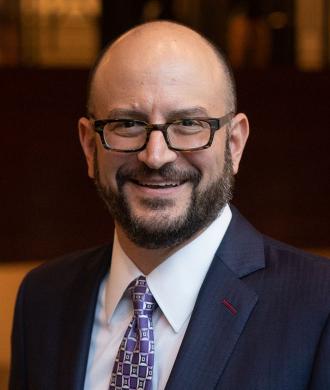

Joseph F.
McGuire
,
PhD, MA
Dr. Brad Schlaggar (BS): Welcome to Your Child's Brain, a podcast series produced by Kennedy Krieger Institute with assistance from WYPR. I'm Dr. Brad Schlaggar, pediatric neurologist and president and CEO of Kennedy Krieger Institute. It's been nearly five years since, in December of 2021, that then US Surgeon General, Dr. Vivek Murthy, issued from his office a call to action with the title Protecting Youth Mental Health, the US Surgeon General's Advisory. His purpose was to raise awareness among the general public about the high incidence of mental health concerns reported by children and adolescents, an incidence that was already high and increasing prior to the COVID-19 pandemic and has continued to be on the rise since. It is now estimated that more than 20% of American children and teens have at least one mental, behavioral, or emotional health condition. Among the most common mental health challenges seen in childhood and adolescence are anxiety and obsessive-compulsive disorder, or OCD. While these diagnoses have some overlapping features, indeed, previously, OCD was considered a type of anxiety. They are separable both clinically, and we think mechanistically, in the brain. We do have good pharmacotherapy for OCD and anxiety with FDA approval for pediatric indications. That said, the first-line therapy for both diagnoses based on good evidence is a form of psychological intervention called cognitive behavioral therapy, or CBT. Joining me today to talk about youth mental health and the critical role of psychologist is Dr. Joe McGuire. Dr. McGuire, a clinical psychologist and accomplished scientist, is the Director of Psychology for the Developmental Behavioral Health Program at Kennedy Krieger, as well as co-director for the Tourette Syndrome Center of Excellence at Kennedy Krieger and Johns Hopkins Medicine. Dr. McGuire is a professor of psychiatry and behavioral science at Johns Hopkins University School of Medicine and is the inaugural recipient of the James C. Harris MD, Professorship in Developmental Neuropsychiatry and Neurosciences Research at Johns Hopkins Medicine. I am excited that he is with us today to talk about anxiety and OCD and their treatment. I suspect we'll delve into Tourette syndrome some as well. Welcome, Joe, and welcome back to the podcast. I'd like to start out by asking you to define both obsessive-compulsive disorder and anxiety disorder. While these are well-known conditions and undoubtedly familiar to many of our listeners, it would be great to have a common starting point for our conversation, as well as learn how these conditions show up in children and teens.
Dr. Joe McGuire (JM): Thank you for that kind introduction, Brad, and delighted to share with you what I know and really help provide some insight here. Mental health conditions, as you said, are really among the most common things that young people are struggling with today and have been on the rise, with anxiety being the most common. I'll get to OCD in a second. How do we think about anxiety? Well, oftentimes young people will present with different types of symptoms, but these symptoms fall into three main categories or domains. First, your physical symptoms or somatic symptoms. This would be things like somebody complaining about a lot of muscle tension, or sometimes kids, when they're nervous about heading to school, will complain of like having a stomach ache. These are one type of symptom. Another one relates to cognitive or worry symptoms. Kids get very nervous that they're going to end before a trip, a lot of anticipation, or even after they do something, they may ruminate on it a little bit. Did I do well enough? Did I get this right? What could I have done better and get caught in these negative thinking patterns? The third category of symptoms is really behavioral. With anxiety, it mainly means avoidance. We avoid the things that distress us. We avoid the situations or even the specific items, or what we would call a stimulus, that make us uncomfortable. When all these things come together, we think about it as anxiety. Oftentimes with anxiety, they'll relate to specific events or activities. What do I mean by that? If somebody's really nervous about going to school, they'll start to have some of these somatic symptoms before school starts to come up on the horizon or even as they're getting ready in the car, their stomach ache might hurt, and they may want to avoid or stay home and have some of these negative thoughts. Those worries happen based on the specific activity. OCD is a little bit different. OCD, as you said, it's related to anxiety, but it is really characterized by the presence of intrusive thoughts that we call obsessions. Obsessions are ego dystonic because half the time people come in and they'll say, Well, my kid is obsessed with Minecraft or Fortnite or Legos because they're really enthusiastic about it. These aren't those types of obsessions. These are thoughts that pop in your head that cause you distress, and you don't want to have them. They don't typically fit the situation that's going on. With anxiety, those tend to be what we think of as congruent with the context or relevant to the situation. OCD, these thoughts can happen at any point throughout the day. In order to alleviate that distress caused by these thoughts, because these thoughts are pretty distressing. We can talk about the different types of thoughts in a second. Young people engage in compulsive behaviors. Basically, it can be anything to alleviate that obsessional distress. For instance, if somebody has a fear that their hands are contaminated because they touched a door handle or something that might be contaminated, washing their hands multiple times or in a certain way really provides that relief from that obsession, which then serves to perpetuate that cycle.
BS: Well, you mentioned that anxiety is perhaps the most common such mental health condition. How common are anxiety and OCD in children and teens?
JM: It's a good question. On average, it depends on the study, but a good estimate of the commonness or prevalence of anxiety is about 10% in children and adolescents. For OCD, it's about 1-3% of the population. Here's what I'll say though about anxiety, and that 10% number is likely an underestimation, similarly for OCD. Oftentimes these symptoms are internal. They're not external. We don't wear anxiety or OCD on our sleeve. It's a little bit hard to even detect them. When we look at studies, between the onset of symptoms, at least in OCD, and to some extent in anxiety, the time between symptoms first starting to be recognized and the time that they first reach clinical care is about five to seven years. I would say that we have a lot more to do to get towards those earlier detections of these really impairing conditions.
BS: Just thinking about your own career, what got you to focus on these particular conditions? As you think about maybe what you thought you'd learn from studying them and taking care of patients with them versus what you now know? Any surprises along that pathway?
JM: Many surprises, and one of the things that people ask about when I see them, because over the years, I've become a little bit of an expert in these areas, and people will say, What got you excited about them, and why have you been studying these conditions? Or I look at the calendar, almost 20 years now. A lot of it comes back to really great mentorship, which I think is a cornerstone of what keeps people in these fields. I served as a research coordinator at Yale's Child Study Center way, way back in the day. Working on these initial trials of behavior therapy for Tourette syndrome. I'm sure we'll talk a little bit about that in a couple of minutes. I had the pleasure of working with some fantastic mentors and leaders in the field, like Jim Leckman, Larry Scahill, and many others who really helped develop these treatments. It was a wonderful, fantastic learning opportunity, and really in that hands-on moment to see the benefit of the treatments that we're researching and how they shaped the lives of patients and families. One of the things that I'll say is with Tourette syndrome, oftentimes you see OCD and anxiety cooccur with these conditions in both children and adults. Really, that's what got me into this area, because you never just see somebody come in clinically with one particular condition. After working at Yale for a couple of years and seeing those studies through, I went and got my PhD, working with some OCD experts and really refined my cognitive behavioral therapy skills there with Eric Storch, and then headed on out to UCLA with some other fantastic folks like John Piacentini, and then came out here to Hopkins and Kennedy Krieger to really build this exciting program. That's how I got into this. I think it's something that I often convey whenever meeting patients and families is how we often think about these conditions with OCD, and we think about these conditions is immovable, especially when you're first struggling with them. With OCD and anxiety, it can seem like a mountain to climb. But we know with good evidence-based treatments, like exposure-based cognitive behavioral therapy or sometimes with OCD, we call exposure with response prevention, and we can talk about what goes on into that in a second, you can actually regain your life back from these conditions. I think that's something that's really exciting to me. Also coming along as we're developing these treatments, as we're refining them or optimizing them, even identifying new conditions or new challenges that patients experience, like misophonia, which came up recently. Really thinking about all of these things together, really to improve the lives of patients and families.
BS: You just mentioned cognitive behavioral therapy and some additional modifiers of that intervention. Let's talk about that. I did mention it in the introduction that it is a first-line therapy for children adolescents with anxiety and OCD. With good evidence, what is cognitive behavioral therapy, or CBT, and how is it implemented?
JM: Great question. Cognitive behavioral therapy and its derivative. With OCD, we often call it exposure with response prevention, but I'll tell you right here and for all the listeners, what are these core components that go into this? It's a skills-based treatment. It's something where you're teaching a young person and ideally, their family, the skills to help manage anxiety and OCD. There's about 4-5 main components to cognitive behavioral therapy. The first is psychological or psychiatric education. Now, what goes into that? It basically means providing the young person and their family with information about anxiety and OCD, what's the condition that you're experiencing fundamentally, and how we're going to take these evidence-based treatments like CBT to address it? This is really important because, one, it reduces a lot of stigma, clarifies a lot of misperceptions and misconceptions, and also helps patients and families really understand why you're doing what you're doing. Because half the time some people will go to the doctors and they'll say, Well, I was asked to do this, and then I'll say, well, why? I don't know. They told me I had to do it. You really want to make sure you understand why you're doing what you're doing. That's the first piece. The next piece is working with the patients and families, young people and families, to develop a treatment hierarchy, or I think about it as a roadmap. How are we going to lay out your symptoms in a way that we're going to target these difficult moments in a way that makes sense and isn't overwhelming? Now, that doesn't mean that roadmap is stagnant. It's going to be something that's a little bit dynamic based on what comes out over the course of treatment. We're building skills one step at a time. We might take a little bit longer at one level or one stop if you need more support. It's never something that's done overnight. It's an evolving process. But there is a finality to it because we want to get you to the end of treatment. We want to support you so that you've learned all the skills that you need to learn. Where OCD and anxiety treatment differ a little bit is on the use of skills to manage somatic symptoms, or what we would call teaching patients relaxation training. Stress management techniques, deep breathing techniques, things to address those muscle tension, physiological arousal that comes along with anxiety. In OCD, we don't really use those skills, but in anxiety can be really helpful to manage those difficult moments. One thing I often say to patients and families is we want to try to reduce stress throughout the day. Using those skills throughout the day is a regular, great way to do that. The other two areas are more related to that cognitive and that behavioral piece. We teach patients and families cognitive skills. This can be challenging those distorted thought patterns or misappraisals, is what it comes down to. Well, what patients will often say, Well, the worst thing is absolutely going to happen. Or I know my mom or dad, or I know so-and-so is thinking this about me. When you push them on what the evidence for that is, There's not there. It's just that fear that's driving it, so really challenging those negative thoughts. The bulk of treatment is placed on facing our fears, or what we call exposures or exposure therapy. What we do is using that treatment hierarchy or that roadmap that we develop. Facing those tough situations one step at a time, really to build resilience. You know, we don't want to push somebody too hard too fast, and it's really about supporting them and overcoming those difficult moments and also taking away some of that accommodation that comes along with that or that avoidance that permeates the lives of patients and families in those moments, and that stepwise process as well.
BS: I'm wondering if there are situations or scenarios, maybe it's the patient's age, maybe no developmental status, or some other factors that might lead you to say cognitive behavioral therapy is not the right intervention to lead with for this patient with anxiety or OCD.
JM: That's a good question. Typically, we would start with cognitive behavioral therapy with or without evidence-based pharmacotherapy, as you suggest, just as the frontline. Sometimes patients and families will come on in, and they'll say, we've done CBT before Dr. McGuire. It doesn't work for me. I will say, I totally understand. Tell me what you did. Usually what happens when they're sharing their journey in that prior course of treatment, some of those components of CBT weren't fully taught to them. They didn't fully use them, or in some cases, they didn't understand why they were doing what they're doing. That's no fault of the prior clinician. I think it's just something, when you've been doing this for as long as we have here, it becomes second nature. What we do is say, here's why this didn't work in the past, and here's why this will be a little bit better. Now, sometimes parents will come on and by themselves and share their child's struggles. They'll say, my child isn't ready for treatment. They can't face these fears. They're not interested right now. We want to say that is totally understandable and here's some parenting tips and tricks that we can do to support you and teach you to help encourage your son or your daughter without even having them come into the office. There's a colleague of mine up at Yale who has developed a manualized treatment. The acronym is called SPACE. It's supportive parenting to remove accommodation and anxious behaviors in children. It's shown to be pretty efficacious in those ways of reducing anxiety. Even if a young person isn't able to make it on in, there's still hope. The last piece, there are some times where somebody can't face their fears. It's just too hard. What we're trying to do more on that research side is look at different types of interventions to target underlying brain-based mechanisms that we know are relevant in CBT. This might be something like neurofeedback or neurofeedback in an fMRI or an EEG. I think there's treatments that we're are investigating, but they're not necessarily something that we would start with first, and they're still pretty exploratory.
BS: I'm glad you brought up brain-based mechanisms because I think we both agree that CBT works via neurobiological mechanisms, that the therapy works via the brain and changes the brain. A misapprehension out there that a psychologically based treatment wouldn't have a neurobiological mechanism, but of course, it does, as we've talked about in this podcast many times. But can you describe how you think about what is happening in the brain with CBT and do the mechanisms differ between anxiety and OCD?
JM: Let me start off with the mechanisms piece first, and then I'll go into what I think is going on. With OCD, we have some pretty clear mechanisms. I've done a couple research studies identifying this in graduate school and after graduate school and even beyond. What you see is that young people with OCD pretty consistently have different ways of unlearning distressing situations or overcoming situations. We would call it impaired extinction learning is the process. That doesn't mean anything's wrong. It just means it highlights a way in which we can try to modify our treatment. Anxiety, there's a lot of different pathways with anxiety, specific aspects, but the same overall processes there. Why that's different, it means kids with anxiety and kids with OCD, they're really good at learning to become afraid of things, and I'll use fear as a general catchall here. It could be uncertainty. It could be doubt, not just right, but we'll use that as a catchall. They're really good at this, and that's fantastic. But what it does is it makes life a little bit hard. You start by learning one association like if I give a public speech and I get really nervous, and I see somebody's face. Oh, my gosh, they think I did something silly and now I can't give a public speech. They thought something terrible and now that entire experience is really overwhelming. That can be pretty tough for somebody. Now imagine that's happening with worries about contamination for OCD, social interactions with other young people in the classroom or at a sporting event. Life can get pretty hard. They're great at acquiring these associations. What we do in CBT is we start to form new associations in that. Those exposures form new learned memories, new neural pathways, and they strengthen them over time. What happens is that new learning starts to block the old learning. Meaning, when I go into that situation where I have to give another public speech again, or when I go into that sports performance situation, I have that initial urge of oh, my gosh, this might happen. And the more I face and build those new memories to know that I'm able to do those things. I'm able to be resilient. I'm able to be tough. I'm able to push through, and the outcome is good. Or at least not bad. What happens is you strengthen that new memory. It doesn't fully take away the other fear, it doesn't take away that other thing. It really helps inhibit it or block it. The reason I make that a bit of a point is it means that facing those challenging moments, whatever they are, for OCD or anxiety, CBT doesn't make it easy, and I want to be really clear about that. But what it does do is it makes those challenging moments easier over time and really cultivate that resilience. Because sometimes people will say, after doing it once or twice, well, it's not easy, and it's like, that's not the point. It's building skills and supporting people to become resilient and overcome those tough moments.
BS: Joe, as I mentioned in the introduction, you're also the co-director of our Tourette Syndrome Center of Excellence. This is a designation provided by the Tourette Association of America, and for full disclosure, you and I both serve on that organization's Scientific Advisory Board. Could you define Tourette syndrome to our audience and speak to, is it common for patients with Tourette syndrome to also have anxiety and/or OCD? You mentioned the co-occurring. How often is that the case, and why do you think that's the case?
JM: Great questions overall. Let's start at the basics. Diagnosis of Tourette syndrome is characterized by the presence of motor tics. These are involuntary motor movements, usually onsetting in childhood, 4-8 years of age is when they most often emerge. The presence of at least one vocal tic or a vocalization. This is what we use to classify folks in this diagnosis. It has to happen before 18 years of age. The thought being that we know that in general, tics will onset 4-8 years of age on average. Seen it pretty young before that too, and oftentimes reaches the greatest severity for most folks in that early adolescent period, so 8-13 is where you see things come to a head, and it's really tough for a lot of folks in that moment. You mentioned co-occurring conditions. About 30-60%, based on the study that you look at, highlight that at least anxiety or OCD will be present in one of those folks who are coming through the door. Oftentimes we talk about the presence of a co-occurring condition being the rule rather than the exception. Most of the time when people come in through our Tourette Syndrome Center of Excellence, they'll say, yes, I have tics, and they onset it here. I also line stuff up a lot of the time, or I wash my hands a ton, or I'm really nervous in social situations, even when my tics aren't present, or I'm a bit of a worrier. Then you start to unpack things, and you realize, yes, it's Tourette syndrome, and. Oftentimes, even we're talking about OCD/anxiety, there can be challenges with things like executive functioning, pulling things together, irritability, mood. The Tourette Association of America has a really nice graphic, talking about how tics are just the tip of the iceberg. I think that is there's a lot underneath, and we often see that with these co-occurring conditions like anxiety and OCD.
BS: During the pandemic, there were reports of adolescents and young adults experiencing what was often reported to be Tourette syndrome, a phenomenon which gained a lot of media attention, and I know you were involved in thinking about that phenomenon. You did that in collaboration with many colleagues across the globe. Actually, you worked on understanding these occurrences. What did you learn? What was it that was occurring, and how do you contextualize it?
JM: We learned a lot, and I would also say we still have much more to learn. Just to go back to that for one second. What was going on is myself and a lot of other colleagues during the COVID-19 pandemic started to see this rise of cases of people having the sudden onset of behaviors where two or three days before there would be no specific motor movements or vocalizations. Then overnight, there would be, over a three-day period in some instances, sudden motor movements, complex motor movements, that would emerge overnight, ranging from punch in the walls to, I remember somebody who bit their dad's shoulder as an instance. We started emailing and starting a conversation about this because we were all seeing the same thing and working with colleagues across the globe to really start to say, well, something is going on, and we need to study it. What we called this condition, because it wasn't exactly Tourette syndrome. We called it functional tic-like behaviors, or if you go from a more neurological standpoint, we'll call it a functional neurological disorder. It's different than Tourette syndrome. With Tourette syndrome, you see tics typically onset 4-8 years of age, reach the greatest severity in adolescence or early adolescence, and you see this natural progression. People have simple motor movements or simple vocal movements that then start to become complex over time. By complex, we just mean involving more muscle groups, different parts of the body. In this particular functional tic-like behavior instances that we were seeing or functional neurological disorder, there was a sudden onset. Happened overnight and really debilitating. Now, in tics, you go back to that general characteristic. We see ADHD, OCD, and anxiety that tend to co-occur more with classic Tourette syndrome or tic disorders. With this other condition, anxiety and depression were the leading causes for this. In general, the profile of folks who fit it was different. Now, the question that everybody asks is, does the treatment course differ for these folks who have this condition, which is really paralyzing? What I would say, again, is a message of hope, but also caution. We know that modifications to behavioral therapy like CBIT can help address those tics. Those functional tic-like behaviors, they're still responsive to the same behavioral strategies that we teach in behavior therapy. Similarly, to cognitive behavioral therapy. There's some interesting nuanced differences between the two, but they actually can help give people skills and their life back.
BS: You just brought up CBIT, and it's a great segue to talk about. There's CBT, and then you add one more letter and you have CBIT, very creative naming that we have in our discipline. But CBIT for tics, CBT for these other conditions we've been talking about. Can you break it down a bit more? Of course, you were very much involved in the development of this evidence-based intervention, CBIT, for tics. Let's break it down a bit for our audience.
JM: CBT, we talked about cognitive behavioral therapy. CBIT is the acronym for the Comprehensive Behavioral Intervention for Tics, or CBIT. Yes, we want acronyms for everything, and there's other acronyms that already have CBIT too, so then it gets much more complicated there. What CBIT does is it also consists of a couple core components. One is similarly psychoeducation, providing information about Tourette syndrome, and also these behavioral strategies that people are going to learn so they understand why they're doing what they're doing. The next piece of CBIT is building awareness around tics and around movements. What goes on to that is young people or children or adults have been experiencing tics for a long time. These things tend to be perceived as involuntary and nearly automatic. A proportion of people will report experiencing what we call a premonitory urge, which is a sensation, this itch, this buildup that happens right before they engage in a tic. The best analogy that I came up with is like a sneeze. You often feel that sneeze that builds up and then you sneeze, and there's some relief afterwards. Similarly, that same type of a thing happens with tics. Patients will report that. What we try to do is help build awareness around the occurrence of the tic, and over time, start to help people recognize the presence of those premonitory urges. Because once we're able to recognize when something's about to happen, then we can start to intervene using some behavioral strategies and principles. The next part of that is then coming up collaboratively with competing behaviors to inhibit the expression of the tic. For instance, if I have an arm jerk tic, working with the patient and family to think about something when I feel that urge for that arm jerk tic, what could I do with my hands or arms to address that so I don't experience or I don't express the tic? Then practicing that and usually, there's some general guidelines we come up with for competing responses. We want to make sure that it stops the tick, doesn't draw any negative attention and you're able to sustain the behavior for about a minute or so. What that's able to do then is you're able to test that out, building awareness, and then starting to inhibit the tick. What you kind of see is over time. You're able to see that reduction in that urge, in many cases go down. That doesn't necessarily mean it goes away for everybody or for every tick. But then when you feel that erg, you're able to manage it in those situations where you want to. For instance, if you're heading to school and you don't want to punch the kid to the right of you, now you have a strategy that you can use in those moments. It works really well, about 50% of kids you we'll exhibit a treatment response to that intervention. A little bit less in adults, which then led to this other project that we're doing using mindfulness. But really exciting stuff.
BS: There's this interesting parallel between obsessions and compulsions and this promontory sensation and ticks, some internal sensation or thought manifest as either a complex movement and behavior like a compulsion or a tick a movement. How do you think about this parallel? Does it indicate mechanistic similarities, or is it happenstance?
JM: A great question, and I would say it indicates mechanistic similarities across the board there is a particular striatal cortical loop that's implicated in both of these conditions, and I don't want to get too technical with that. But I think you very astutely identified that there is that overlap there with the underlying brain basis of behavior. I would contend, even with exposures that we do in CBT, and behavioral responses that we do in CBIT. There's a lot of similarities, and I got to give you a ton of credit for saying it so eloquently. You have an intrusive thought. You have an obsession. You have something that's eliciting distress and now we're teaching and learning and cultivating that resilience by doing another behavior that either stops the expression of the tick or doesn't serve to alleviate that distress. A lot of these treatments are literally retraining our brain through new learning and that's why we think about them as a skills based treatment, as a learning based treatment. I often say to patients who'll come on in with co occurring conditions, and let's say, well, do I need to have a twice long course of treatment? Are we going to use CBIT for one, CBT for another? I'll say, I feel so fortunate as a psychologist, because I'm going to teach you skills to target each one, and whether we call it an OCD symptom or a tick, whether we call it a fear or whatever these skills will work. We know practice doesn't necessarily make perfect all the time, but practice makes better. As long as we're practicing, we're able to get.
BS: As a neurologist, I prescribe medication and as you know, I took care of a lot of patients with Tourette syndrome and all these co ocurring conditions, and what I would work very closely with my psychology colleagues because I would view the medications, even though they had evidence basis for treatment for OCD and anxiety and ticks, the meds aren't smart. They're not going after the problematic challenging behavior. They're not going after the retraining of the brain. They might be facilitated, but they're not smart, they're not targeted, whereas, the psychologically based interventions are really targeting the behavior that is problematic. For that reason, I think, more robust and more likely to be effective as a first line therapy.
JM: Absolutely, and I would say, as a psychologist, I think that's where the partnership comes on with neurology and psychiatry, where when you have that multi disciplinary, and I would say interdisciplinary care. You're working together, you really get the best outcomes for patients and families, which I think that's why I'm here.
BS: Well, Joe, let's talk about some other more recent interventions. There's a so called digital mental health intervention that is emerging. What is that? Do you consider to be an effective treatment approach for children with mental health diagnoses?
JM: Great question. Let me zoom out here a little bit. Digital mental health interventions have undergone different names before that it was mobile health interventions. It was apps. The thought with this is, accessing care is hard. For a lot of folks, before teletherapy became pretty widespread. Getting access to care was hard. Say somebody comes in from Hagerstown, for instance, that's a 90 minute drive one way for an hour session. It would be pretty hard for somebody to do that on a weekly basis, which is typically how we do CBT. In some instances, we've been able to address those barriers by having telehealth. Fantastic. But telehealth is still limited by the number of clinicians that we have available. I think that digital mental health interventions have a role of serving to increase access to care within a continuum of care. What these interventions often do is take CBT skills, cognitive behavioral therapy skills, and teach them in a fun, engaging way. Some DMHIs are geared towards children. There was a clinical trial that was wrapped up, and we have the paper under review, which taught kids and parents how to do CBT through fun interactive games. I think gamification is really powerful. Coming on into therapy can be intimidating. I can be pretty boring and I tell a lot of bad dad jokes, and you're kind enough to laugh at them, so I'm grateful for that. But it's hard. Facing your fears is hard work. I think what gamification, whether it's in an app or in the context of therapy you can do, is present therapeutic exercises in a much more fun, engaging manner, which I think is really powerful. Now, one of the challenges that comes up is assessing effectiveness or efficacy or a therapeutic benefit of these apps. Some of these apps have shown benefit in randomized clinical trials, which is fantastic. Some of them have not and I think that that's an important thing when considering an app because somebody might hear this program and then say, Well, let me go download this. I'm too intimidated to go to therapy or my kid's not ready yet, let me see what's out there. Not all the apps that are available in any app store have actually been shown to be beneficial in clinical trials. The other piece that I would say that some very wise person is going to say, Well, I'm going to go into the scientific literature to find out which ones are there and have shown evidence. I would say not all the ones that have been shown to be effective in randomized clinical trials, which is the gold standard in medicine are still available. I think that's where we need to think about how to not only develop as researchers, as clinicians, therapeutic tools or digital mental health interventions, but also make sure that they remain sustainable and accessible to patients and families. Really thinking about not just getting the paper out, but building that continuum of care.
BS: A related technology and a comparable experience that brings you into a place that doesn't require 90 minute drive that makes you exhausted when you're sitting down for your therapy and anxious all the way in waiting for the therapy is a virtual reality. Can you speak to the potential benefits of virtual reality versions of interventions?
JM: I am a huge proponent of virtual reality and virtual reality interventions. I've been fortunate enough to be involved in that for a little bit of time, going back to before it was cool, 2015, 2016, when I had to buy a massive $5,000 computer that I put together myself building all these functionalities and in one of the other offices here, we have that entire setup right now. I'll share what got me interested in it, and then I'll tell you where its therapeutic, interest is. Where I got interested in is I was working with a group of folks, and they created this virtual reality escape room. I was going through, trying to solve it and I kept walking around this table in virtual reality. Finally, and I am not the most technologically savvy person. The programmers who are with me coaching me through this, the table's not there. Just walk through that space. You're taking way longer to solve this. I was like, that's right. My brain didn't process that there wasn't anything there and I believed it was there. I was spending way more time than needed. Why that matter is is it shows you the power virtual reality. You can immerse somebody in this virtual environment and it's not the most savvy. I knew where I was. I drove to the place, we tested stuff out. But I was immersed in that moment and I was able to kind of do these things that I wouldn't normally necessarily do. We can do why that comes into therapy is one, we're not at that point where you're going to put on your headset and somebody else is going to put on your headset, and you can have virtual therapy. We're not there yet. I think we're starting to explore ways of trying to do that in the research setting but that's likely a couple years away. How we can use virtual reality in the context of treatment is to optimize facing our fears in a controlled safe manner. Take a fear of heights. If somebody comes on in, with the fear of heights that we have to address. We don't have to spend the entire time going up all the stairs, finding tall buildings. We just pop on a headset, load up an app, and start to work our way up in a controlled safe environment. The same can happen for spiders, for dogs, pretty much anything you can imagine, we can do that. Right now, we just wrapped up a study on doing virtual reality exposures with OCD. These are all things that we can do. Then somebody's going to say, well, we should do virtual reality for everything and I would say, if I can walk out of my office and find that situation or we can face our fears in here without bringing in technology, that's going to be way easier and more disseminate in clinical practice. But I think there's a lot of things that we can use virtual reality for, and which is really exciting.
BS: Joe, last question, there's a lot of excitement for you on the horizon for work that you're doing. If you could identify the single most exciting direction that you find in the research space that will likely yield improvements for patients that you care for, what would it be?
JM: That's a tough question. I would put, even if I could split it apart. I would say the most exciting advance, and I would say something we need to research to protect patients. Let me kind of start off with the protection of patients, and then I'll go to the exciting advance because I like to end on positive things. In terms of protecting patients, I think we need to study as a field AI and its effects on child mental health. This is something that is coming up much more and increasingly at a faster rate. We don't have clear guidelines. We don't know how some of these algorithms are working. We have increasing number of patients relying on AI in families for different uses. Sometimes it's to seek medical care or ask questions, and there can be some concerning results when you ask those questions that I don't really want to go too much into here. Or the other part is, it's not even just seeking medical advice or am I anxious or am I depressed or what should I do here? It can also just be engaging with AI chatbots for increasing amounts of time. For a kid, a young person who might struggle to make friends, for a young person who feels socially disconnected, having an AI chatbot at the outset, can be nice. You're having some social interactions. But over time, now that chatbot gets to know you better, and with the algorithms that are there, you're much more engaged, and now you're spending two, three, four hours engaged with this rather than participating in building those social interactions. That's the concerning thing that I think we need to visit field work towards. In terms of the things that excite me, I think there's so many areas. Neuromodulation is one of them that you and I have talked about where we're able to activate and engage the brain at a much more targeted level. Light therapy and these alternative therapies. We know, work in some areas, I think have some potential. But ultimately, what excites me is about using technology to increase the access and the effectiveness of care, which got me into virtual reality, which got me into digital mental health intervention. Really using the tools that we have to improve the lives of patients and families, which we know we can do.
BS: That's a great place to end. I want to thank our guest, Dr. Joe McGuire, for joining us today and for giving us so much detail about the important work he's doing here at the Institute and at Johns Hopkins. Thank you, Joe. I hope our listeners have found today's discussion to be both interesting and informative, and that you'll share this podcast with your friends and family and rate us if you're so inclined. Please check out our entire library of topics on your child's brain at wipr.org, KennedyKrieger.org/ycb or wherever you get your podcasts. You've been listening to Your Child's Brain. Your Child's brain is produced by Kennedy Krieger Institute with assistance from WIPR and producer Mark Gunnery, please join us next time as we examine the mysteries of your child's brain.


