
The Growing Field of Child Neurology
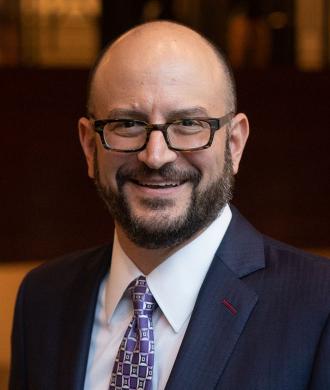
Just like adult neurologists, pediatric neurologists take care of conditions and diseases involving the nervous system, including the brain, spinal cord, nerves, and muscles. They do so in the context of development, from preterm newborns throughout childhood and adolescence into adulthood. On this month’s episode of Your Child’s Brain, we highlight the field of pediatric neurology, including why right now is such an exciting time for the field. Our host, Dr. Brad Schlaggar, president and CEO of Kennedy Krieger, is joined by Dr. Brenda Banwell, a pediatric neurologist, director of the Department of Pediatrics at the Johns Hopkins School of Medicine, and co-director of the Johns Hopkins Children’s Center.
Resources
Learn More About Dr. Schlaggar and Dr. Banwell
Learn More About Dr. Schlaggar and Dr. Banwell

View Episode Transcription
Dr. Brad Schlaggar (BS): Welcome to Your Child's Brain, a podcast series produced by Kennedy Krieger Institute with assistance from WYPR. I'm Dr. Brad Schlaggar, pediatric neurologist, and president and CEO of Kennedy Krieger Institute. As you just heard, I'm a pediatric neurologist, also referred to as a child neurologist. For the very most part, pediatric neurologists are trained in both pediatrics and neurology, making it possible for us to be neurologists for children. Just like adult neurologists, we take care of conditions and diseases involving the nervous system. That's the brain, spinal cord, nerves, and muscle, but we do so in the context of development from pre-term newborns throughout childhood and adolescents and into adulthood. For many of us, we take care of adults with pediatric onset, neurological conditions as well. The neurological conditions and categories of conditions that affect children are broadly similar to those that affect adults, including headache, stroke, epilepsy, movement disorders, neuromuscular disease, and so on. But often, those conditions have different etiologies and show up differently clinically than they do in adults. The modern field of child neurology has roots that go back at least to the early 19th century, even though the formal discipline didn't come into existence until the late 1950s when the first dedicated child neurology clinical services were established. The formalized training pathway for child neurologists in the US came in the late 1960s. Now, Johns Hopkins School of Medicine, Johns Hopkins Hospital, and Kennedy Krieger Institute all played integral roles in establishing the discipline. I think this is a good time to remind everyone listening in that Kennedy Krieger has had a 60 plus year academic affiliation with Johns Hopkins, but is a separate entity. For example, because of that affiliation, I'm a professor of neurology and pediatrics at Johns Hopkins University School of Medicine, but employed by Kennedy Krieger Institute, and of our 3,500 employees at the institute, just over 200 are faculty at Johns Hopkins. One example of Johns Hopkins' significant contributions to the origins of the field of pediatric neurology relates to one of the so-called big four physicians credited with the 1889 founding of Johns Hopkins Hospital and the 1893 founding of the School of Medicine, and that's Dr. William J Osler. Dr. Osler, whose career in Baltimore spanned 1889-1905, while not a neurologist himself, clearly had a passion for the nervous system, especially in children. Indeed, in 1889, the same year he came to Baltimore, he published a monograph on cerebral palsy coining the term. He had countless other contributions that helped shape the field. For this month's episode of Your Child's Brain, we're going to highlight that field of pediatric neurology, including why right now is such an exciting time for the field. Joining me today is my friend and colleague, Dr. Brenda Banwell, a pediatric neurologist. Dr. Banwell is the director of the Department of Pediatrics at the Johns Hopkins School of Medicine and co-director of the Johns Hopkins Children Center. That's the pediatric hospital within Johns Hopkins Hospital. She is the Given's Foundation Professor of Pediatrics and Professor of Neurology at the Johns Hopkins University School of Medicine. Brenna took the helm of the Department of Pediatrics in September of 2024 after leading pediatric neurology at The Children's Hospital of Philadelphia and University of Pennsylvania with great distinction for 12 years. Welcome, Brenna. Brenna, in the introduction, I gave a bit of background about pediatric neurology. But can you define it further and share how you think about it and what drove you to decide to be a pediatric neurologist?
Dr. Brenda Banwell (BB): Thank you for having me. I am looking forward to our conversation. Child neurology, as you've mentioned, is a field of specialty for people who either are pediatricians, who then completed extra training in child neurology and in child brain health and development. Less commonly today, but certainly in the past, sometimes individuals who trained in neurology formally on the adult side and then recognized that they really wanted to spend their careers looking after children and young adults and took additional training or fellowship in the field of child neurology. Either way, we are a synergistic team. We look at the nervous system, the brain, spinal cord, and optic nerves, as you mentioned, peripheral nerves and muscle, and disorders of any of those areas of the nervous system both in early fetal life and then all the way through adulthood. As a child neurologists, we are often both identifying a disease or a diagnosis in a child, but then we are also considering the impact of that condition on normal brain development, normal muscle health, normal maturation of the nervous system, normal growth and development of intellect and social cognition, and all the things that define who we are as a person. A child neurologist really covers a lot of ground in terms of areas that affect the children, infants, and youth that we look after.
BS: Brenda, before we dive in further, I'd love to hear you describe your background and career and career journey, leading up to your most recent chapter, and I hope it's a long chapter, and that's taking the helm of pediatrics at Johns Hopkins.
BB: Sure. Well, I think, and I've shared this with mentees over the years, my journey has been one of doors opening and feeling welcome, not necessarily a script or a journey that I knew I was going to go on from day 1. I'm Canadian. I completed my medical school in London, Ontario, at which point I thought I was going to do family practice because I knew I really, really enjoyed families and getting to talk to people in the context of their family. I then did, as we all do in medical school, various rotations and realized that my career belonged in pediatrics, and I credit an amazing nurse with whom I worked as a medical student who terrified everyone, and I thought she was wonderful because she was an advocate for the children and babies under her care, and I had great admiration for her clarity of purpose and her incredible teaching skills. I became interested in pediatrics. No idea I was going to do child neurology when I started pediatrics training. At that point, pediatrics was a three-year training program, and then neurology was three years on top of that. But very quickly, and again with mentors, I worked with some amazing child neurologists, Simon Levin to name one, who guided me and taught me just the incredible beauty of the human experience and all the ways it's expressed, whether that's with eyesight and a smile or full language and articulation. I decided to do child neurology. I then went to the Mayo Clinic to do neuromuscular disease and trained with Andrew Engel, one of the most brilliant muscle pathologists in the world who passed sadly a couple of years ago, and thought my career was going to be in muscular dystrophy and neuromuscular disorders, which over many, many years it has been. I have continued to look after children with those diagnoses. But in the first month on staff at The Hospital for Sick Children in Toronto, a retiring professor and chair pediatrics at the time asked me to look after five children with multiple sclerosis. Not what I trained in, not what I had experience in. At the time, the entire literature on pediatric onset, multiple sclerosis, took me less than a day to read, and the entire therapy literature was one case report of an eight-year-old treated with what was now called Betaferon in the UK. I started that journey with my nurse and my nurse practitioner, and the three of us boldly decided we were going to create a pediatric multiple sclerosis program and we were going to learn everything we could about the field. I attended conferences and badgered countless professionals to teach me, read everything I could on imaging and genetics and all of the facets of the immune system in this condition. At the time, you couldn't even make the diagnosis because the formal diagnostic criteria excluded children. My journey in multiple sclerosis and neuroimmune conditions started absolutely driven and has remained driven by what my patients and their families ask me. Does this disease exist? Why is it happening to me? What can we do about it? Importantly, what can we do about it, not only for me, but all others like me? That led to some amazing opportunities that I've been very fortunate to have at the international level to advocate, for example, for medications for multiple sclerosis to be on the essential medicines list through the WHO. My journey has been literally winding. I never thought I'd leave Canada until The Children's Hospital of Philadelphia offered me the opportunity to lead an amazing division. Then at the conclusion, as you said, 12 years in that rule, I had the opportunity to lead pediatrics here at Hopkins, which I am incredibly honored and still, quite frankly, somewhat surprised every morning when I get up to look at my badge and think, how did I get here? But I'm very privileged to be here.
BS: I mentioned Dr. William Osler. By the way, Canadian.
BB: Canadian.
BS: Born in Ontario. I think you were born in Manitoba. But still, his path took him to Toronto, then to Montreal, then, like you, Philadelphia, University of Pennsylvania, then to Baltimore. No pressure, Brenna, but. We're going to talk more about your work in multiple sclerosis, including at the international level later on. But just also comment that your point about the winding path and not a script is such an important discussion point around career development pathways in general, and I think it's really a great one to emphasize. Many of us who are in pediatric neurology considered other brain-based disciplines like adult neurology, psychiatry, even neurosurgery. Were you distracted by those options, and what is it about pediatric neurology that drew you in?
BB: Unlike some of my colleagues that entertained all of those areas, if I was to say what my other next job would have been, I would have always remained in pediatrics. I think all of us when we differentiate ourselves, there are different cut points as to who are you. I am absolutely 100% of pediatrician, and nobody would mistake me for a neurosurgeon. My cut point was I did a lot of neonatal work when I was a pediatrics resident. I did air transport, picking up fragile premature infants, resuscitating them, and bringing them back from Northern Ontario into the neonatal intensive care unit. When I was early on staff at SickKids, I did a lot of work in the pediatric ICU. For the last 25 years until I came here, I did 8-10 weeks of neurocritical care as my inpatient life. My heart and soul has always been at the bedside with infants and children and teens. My differentiator was that. Not because I didn't admire adult neurology, I do. I have great respect for the fields of adult neurology, but my passion has always been peds.
BS: One of the distinctions for adult and pediatric neurologists, broadly speaking, relates to communication with patients and families. How do you think about that aspect of being a pediatric neurologist, that aspect of communication with patients, parents, and families?
BB: First of all, I think it is both very similar and then importantly and behaviorally different. I would make the point that almost all adults bring with them, if they can, a partner, a champion, a family member, or a friend. With their expressed permission, we communicate to more than the patient who almost always needs a sounding board, and how we do that matters. In pediatrics, our primary communication is with children and teens, and I joke when I train my colleagues that I know if they're destined to be involved in pediatrics if they can examine a two-year-old and talk to a 15-year-old. Because they are absolutely discerning judges of whether you're credible, and they don't care what your degree is or where you trained or what your badge says. They only care about whether you really know what you're doing when it comes to examining a two-year-old and getting them to trust you and to demonstrate their skills with you and a 15-year-old who doesn't inherently believe you have their best interests at heart. They don't want to share private information with you just because you showed up. You need to really convey and often, on their own, that you're their advocate, you're their voice in healthcare, and that you're going to then give them their own voice back, that you're going to give them the language to communicate what they feel, to better understand what they're going through, to advocate for the treatment that they will do because we all know teenagers will do what they want to do. If they aren't invested, they won't do it, nor does anybody else. I love that challenge. I love that engagement, and it is a very, very delicate balance, but it's supposed to be. It's not supposed to be easy to do this. It's someone's private history and then bringing that back around into the family, where we make sure that a particular teenager in this context is able to share with their family what it is they personally are worried about as well.
BS: I completely agree. I think I referred to what you were just describing as a pediatric sensibility. I could see it in a young physician in training and recognize that they're very likely going to succeed as a pediatrician because of that sensibility. One of the challenges for this discipline of pediatric neurology, a discipline we both love, is that there are only about 2,000 or so of us in the US, which is too few. What are the challenges for growing our discipline?
BB: The challenges we're facing in growing our discipline of child neurology are echoed across multiple pediatric specialties, actually, as well as pediatrics as a field. First and foremost, in our training of medical students, we need to expose our medical students to the joy of pediatrics early so that they can have the same experience both you and I did, which is I can't imagine not looking after children. I'm still in odd that I get to do that. How we can convey that early frames as it did for me and many others very early on that cut point of I'm going to dedicate my career and my training and my countless hours of work to the lives of the children entrusted to my care? First, we have to have access. We have to let people see the joy of this field. The second challenge is, and this is true across all specialty training, by the time somebody gets to independent career practice, they've likely gone through four years of undergraduate training, potentially a PhD, which could be three to four or five years more, four years of medical school, and then for child neurology five years of training, and then potentially one or two years beyond that of fellowship. When you get up to 14 years of post-high school commitment before you even really start your first job, we're talking about a community of very dedicated people who've put a lot of their life on hold, who've moved multiple times in that training journey often, potentially, with a partner or even their own children or other members of their family. That sacrifice of time and commitment really requires that people are motivated and supported and recognized of how important the field is, and we have to convey that to them in order to draw people into this space.
BS: Brenda, over the course of your career, there have been many advances in the world of pediatric neurology. What advances stand out in particular for you?
BB: Well, the one that made me absolutely cry the hardest, literally in the middle of the American Academy of Neurology meeting, was the videos that Dr. Mandel showed for the first nine children treated with a genetic therapy or gene-modifying therapy for a disease called spinal muscular atrophy, which is a condition I have diagnosed too many times in my life, one in which the prognosis for survival to age 2 of the infantile onset form, as you know well, is very, very low. Most of these babies lose the ability to breathe in year 1 to 2 of life. To see videos, and particularly, I remember it like it was yesterday, of a toddler carrying two suitcases in her hands, toddling and walking on camera at the age of about four when she should obviously have long since passed away was just an overwhelming demonstration of translational medicine, of hope, of innovation. I don't think many of us have ever seen that in our lifetime to see a fatal disease into one that is now very modifiable if captured early, and that's not true of all the children who are living with later stages of this disease, but for the newly diagnosed infant. My first patient treated with gene therapy does ballet now. She's a sassy eight-year-old, and she swims. I remember making her diagnosis at three months of age by being able to offer incredibly powerful therapy. I think it's hard to top that in terms of seeing something so powerful.
BS: I agree. I remember the grand rounds where I first saw that presentation, late 2017, paper being published about the treatments for spinal muscular atrophy. It's less than 10 years, but it's truly transformative. A condition that we all saw tragic loss of life early, really a change in the natural history as a consequence of this intervention. You mentioned earlier that you've been focused on multiple sclerosis an epiphany experience in your training. Much of your career has been devoted to the research and treatment of pediatric multiple sclerosis, which is in the general family of neuroimmune disorders. Broadly, what are neuro immunological disorders and how has that category of illness expanded over the past couple of decades?
BB: The neuroimmune diagnosis, which literally means the nervous system is under attack by the immune system. The manifestations that I will refer to are those in the central nervous system, although this also happens to the peripheral nervous system. In the central nervous system, the neuroimmune conditions that we would most commonly see are multiple sclerosis, a condition now labeled MOGAD, myelin oligodendrocyte glycoprotein antibody-associated disease, which is why we shortened it. Autoimmune encephalitis, neuromyelitis spectrum optica disorder, and others. But the big ones that we see the most often in pediatrics would be autoimmune encephalitis, multiple sclerosis, and MOGAD. In each of these conditions, the real manifestation is a disregulation of the immune system, where the immune system is attacking proteins in the brain, spinal cord, or optic nerve that belong to us, which is the definition of autoimmune here, and failing to recognize that mistake and continuing to do so. Our therapeutic goals are to reset the immune regulatory orchestra, really, to try to tone that down so that the attack abates, patients recover, and we can control the likelihood of further attacks of the immune system over time. It's now a very rewarding field in multiple sclerosis in terms of highly effective therapy. A lot of emerging data on MOGAD, which we wrote the international criteria for only in 2023, and then an increasing array of diagnostic tools to recognize autoimmune encephalitis, which looks more like an infection, although there isn't an infection. It's the immune system attacking acutely in the brain, and now more and more what we call antibodies or immune proteins are being identified that help guide us both to recognize the condition, but then also to guide therapy. A lot of really amazing work has happened in the last two decades that have propelled all of those areas. Of course, multiple sclerosis has gone back all the way to Charcot, with more than 150 years of identification, and then now in the last three to four decades highly effective treatment.
BS: These are all, broadly speaking, rare diseases, and it takes a collaborative approach, national and international, to get at them. You've touched on this a bit, Brenda, but can you speak to your roles nationally and internationally in leading research in those key areas?
BB: I've been very fortunate and very, again, back to doors opening and feeling welcome. With respect to multiple sclerosis, I served as the lead investigator for a 26 site study that was funded consecutively from 2004 through to the pandemic, looking at the determinants of what really leads to multiple sclerosis recognition in children, so their earliest imaging, immune features, genetic features, cognitive outcomes, clinical outcomes. In partnership with an amazing group of other investigators across Canada and at The Children's Hospital of Philadelphia, we really contributed substantially to a lot of the early recognition of what multiple sclerosis really looks like in children. In 2004, that was at a time when officially we didn't even have diagnostic criteria. That study and other work that we were doing led to my invitation to serve on the 2010 McDonald International Diagnostic Panel, which is a group of experts from around the world that write the diagnostic criteria for multiple sclerosis and revise it over time. The 2010 revisions for the first time formally included pediatrics, and I was the privileged pediatric neurologist that got to serve on that committee to make that case. I've been now on that committee in 2010, 2017, and most recently in 2025. I have had a chance to contribute to the diagnostic criteria as they include children. For the myelin oligodendrocyte glycoprotein antibody-associated disease, MOGAD, there were early proposed, not necessarily criteria, but proposed recognition of this condition. But we recognized as a community, it was time to pull that into diagnostic criteria. This was our COVID project. A group of us representing 14 countries met every week for over a year, and we worked through creating diagnostic criteria and helping to differentiate this condition from multiple sclerosis. I wasn't supposed to chair that. I was originally invited to, again, be the pediatric or one of the pediatric representatives. There were several others. By a series of happenstance, I ended up leading the meetings and then ultimately leading the authorship of the paper with the full support of this amazing community, all of whom I now consider very close friends. One of the most rewarding things I've ever been part of. Then I serve as the pediatric or one of the pediatric representatives now three times in a row for the neuromyelitis optica spectrum disease international criteria as well, and then I have partnered on multiple projects for autoimmune encephalitis. In every one of these situations, it's been an incredible responsibility because these are serious bodies of work, but an amazing way to meet the people around the world who share this passion and who are thinking so hard. Then finally, on the international scale, in particular, I've served as the chair of the International Pediatric Multiple Sclerosis Group, which is now over 150 members over 50 countries, and is the medical director of the Multiple Sclerosis International Federation, which represents all MS societies worldwide, and that led to work to advocate for medications for multiple sclerosis to be on the essential medicines list, as I mentioned earlier, which up until recently that had not occurred. There were no medications for multiple sclerosis on that. In many countries, the Essential Medicines List is the blueprint for what a country supports financially on their therapies. Without being on the list, therapies can be unavailable in a given country entirely. I was part of that. That was led to the Cochran Group and partnered with the MSIF, but an incredibly important body of work.
BS: I know we both agree that this moment is an exciting time for pediatric neurological disease, research, and intervention. What do you see as the main reasons for that excitement?
BB: Multiple, but I'll start with the conditions that might be amenable to genetic therapies and the potential to make those diagnoses either pre-birth or immediately at birth with newborn screening. I think we can all understand that any condition that injures the brain or the spine or the nurse to the eyes would be better treated before that injury occurs, and trying to repair the brain is much more difficult than preventing the damage in the first place if an option exists to prevent disease. I think one of our greatest opportunities would be to develop therapies that are deployed before there are even symptoms of the condition we're treating, and that is a huge step forward. There are multiple examples of that, as you know very well, in the leukodystrophy field, for example, obviously spinal muscular atrophy, and I hope other diseases and conditions moving into the future. That's one enormous area of advance and a huge excitement. In the neuroimmune world, in my multiple sclerosis patients, when I started in that field and asked my teenagers particularly, because it's a disease that particularly affects teenagers, what is it like to live with multiple sclerosis? I would get a long list. I had a relapse last week. My injections hurt. I feel tired all the time. I can't think straight anymore. I'm not able to do sports anymore. I can't go to camp. Now, when I ask my teenagers what it's like to live with multiple sclerosis, most of them have only ever had one attack because we've recognized, diagnosed them, and started therapy all in a span often of one to two weeks. They've never even had a relapse. They have had one event. They're on highly effective therapy. It's often given with different medications, but some of the medications are only an infusion every six months and nothing in between. They look at me like I don't know what I'm doing when I ask them what it's like. What do you mean what it's like? It's like it was last year. I'm going to grade 10. I'm playing on the basketball team. I'm a great musician. I enjoy art, and they really don't know what I'm asking. To see that difference in a span of less than two decades from a daily reminder of a life-altering diagnosis to I almost forget I have this condition is an incredible advance in therapeutics. We're humbled by knowing that we need to know how they're going to do as adults. We realize there's more to this story. But in the current reality of highly effective therapies, it's just a sea change in the conversation and in the experience of individuals living with multiple sclerosis, many, many of whom really are doing incredibly well. Those are two of the advances. I think the other with all of our technology and our ability to use information intelligently to help serve us, it gives us an opportunity to really recognize when the best of therapeutic options are failing and to figure out why. As a illustrative example, using therapies to control seizures. They only work if you take them, and you can only take them if you can afford them, and you can only afford them if someone actually asks whether you can afford them and make sure that they're available to you. All of that makes so much sense, but it is the fabric of truly social determinants of health, and we live in a very expensive world. Ever more so, we need to be sure that our families, all of our families, can gain access to the treatments that their children need and deserve. I think one of our greatest advances is going to be able to use our own technologies to look at cost, to look at whether people pick up their medicines because we can tell if they're getting their therapies, to send out reminders when blood work is needed to safely monitor them, to keep people safe and treated and supported, and also when at all possible to even prevent some of the problems that they might otherwise experience if we fail to recognize this. It doesn't sound as exciting as gene therapy, but it's going to potentially impact far more of our community just by really being that advocate for them and making sure they can gain access to what they need.
BS: We talked about peds neurology, which is our shared passion. But your purview and your role here is beyond peds neurology. It's really all of pediatric care at Johns Hopkins Children's Center and your shared leadership role there. Can you share your vision for the Johns Hopkins Children Center as well as your vision for where we need to head to optimize pediatric brain health?
BB: First and foremost, one of the joys of being a department chair is the learning curve as one reacquaints oneself with all aspects of pediatric health across the different domains and subspecialties in pediatrics as well as community pediatrics. Our responsibility is to, first of all, be the open door and immediate resource and life-saving resource for children in East Baltimore and beyond. Johns Hopkins is the only level 1 trauma and burn center in the state. Our helipad is never closed, and we serve the sickest children, those that need us the fastest, and it is an immediate imperative to do so. We have a level 4 neonatal unit, where we, again, take care of the tiniest babies that arrive way before they were expected and babies with incredible complexity, whether that's congenital heart disease, diaphragmatic hernia, or any one of a number of detectable but still life-threatening or life-altering challenges. Then we are a quaternary level hospital, so we look after children with cancer, we look after children with many other diagnoses, and we need to do so always at the top of our game. But we also have a network of partners, so KKI being one of our favorites in the sense of years 60 of partnership and continuation of care when children emerge from the acute setting into more of the next stage of rehabilitation, which is so essential. How we recover is itself a huge part, as you know very well, of the process of any health illness, and that we couldn't be more fortunate to have the partnership with the world-class program that you provide across the board as well as our community partners that have newborn nurseries and emergency rooms that we partner with to keep kids safe in the community. Our vision is, first and foremost, to serve our constituents in our communities at the level they expect from Johns Hopkins and the level we expect of ourselves. Unique to being a pediatric department and children's center within a university and a health system is that we truly can adopt what we're referring to as we care for you for life construct, which is that we can be part of the fetal diagnostic journey and the newborn care with mom and baby, and we can have a process for truly continuing care as an emerging young adult. We don't need to send someone somewhere else. We're not like a children's hospital that might end their care at a date and have to send families to an adult care facility. We actually have all of that right here, but we have to make that a really, really passionate reality of excellence across all aspects of the care continuum. Those are a couple of very important components of who we are, and there are many others, but I think those describe the fabric of what we want to bring forward as the Johns Hopkins Children's Center and the Department of Pediatrics.
BS: I really appreciate you pointing out our wonderful partnership a long-standing and also the point you just made about transitions. That's a conversation you and I have been having since you first were showing up in Baltimore to consider this position, so I totally agree with that point, and we have this wonderful opportunity here in this community to really understand how to optimize that transition of care into early adulthood. Well, that's a great place to end. I'd like to thank my guest today, Dr. Brenna Banwell. I hope our listeners have found today's discussion to be both interesting and informative, and that you'll share this podcast with your friends and family and rate us if you're so inclined. Please check out our entire library of topics on Your Child's Brain at wypr.org, KennedyKrieger.org/ycb, or wherever you get your podcasts. You've been listening to Your Child's Brain. Your Child's Brain is produced by Kennedy Krieger Institute with assistance from WYPR and producer Mark Gunnery. Please join us next time as we examine the mysteries of Your Child's Brain.


